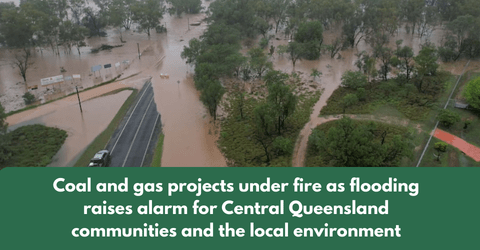
A Central Queensland–based conservation group has renewed concerns about the impact of coal and gas projects on communities, waterways and the Great Barrier Reef following widespread flooding across the region – exacerbated by the release of contaminated coal mine water.
The past fortnight has seen record rainfall across northern and central Queensland, resulting in significant flooding of towns and low-lying lands. Property damage and stock losses have been devastating for many affected residents.
Environmental Advocacy in Central Queensland (EnvA) warns that the full environmental and community impacts of these flooding events are yet to be assessed and are likely to be significant.
EnvA Director Dr Coral Rowston said the increasing severity of weather events highlights the urgent need to rethink the continued approval of fossil fuel projects.
“Our hearts go out to everyone who has been impacted by the recent heavy rain and flooding,” Dr Rowston said.
“We expect cyclones and rain during the wet season, but the frequency and severity of these events is increasing. It is time to seriously consider the merits of continuing to approve new and expanding coal, gas and oil projects.
“The science is clear: approving new fossil fuel developments increases greenhouse gas emissions and accelerates climate change, which in turn leads to more extreme and destructive weather.”
EnvA is also closely monitoring coal mine water releases following the flooding and has raised concerns about the scale of polluted water entering local catchments and ultimately flowing to the Great Barrier Reef.
“The coal mine water release data is alarming. Today alone, 19 coal mines are releasing highly saline and contaminated water across 26 release sites,” Dr Rowston said.
“Some release points are discharging well over 5,000 litres per second — an extraordinary volume of contaminated water entering the Fitzroy Catchment.”
Dr Rowston pointed to Ensham Coal Mine as an example, noting the salinity levels in released water remain far higher than those in receiving waterways.
“At Ensham, water is being released at around 4,000 litres per second, with salinity levels more than 66 times higher than the Nogoa River,” she said.
The Ensham mine was completely flooded in 2008, an event that led to changes in coal mine water management and commitments to better assess the cumulative impacts of multiple releases during flood events.
“Despite the lessons from the 2008 floods and promises to protect our waterways, not much has changed — except that more land has been approved for coal mining,” Dr Rowston said.
“Coal mines contribute to climate-driven extreme weather and then add to the flood burden by releasing huge volumes of contaminated water into already stressed waterways.”
EnvA said local communities rely on these waterways for urban and irrigation use and deserve access to clean, safe water.
“Our Reef is already under pressure from warmer sea temperatures and the sediment churned up by floods and cyclones. Adding more pollution is not the solution.”
“It’s time to stop adding fuel to climate change. Coal and gas are no longer the solution to our energy needs.”
 EnvA - CQ
One thought on “Coal and gas projects under fire as flooding raises alarm for Central Queensland communities and the Reef”