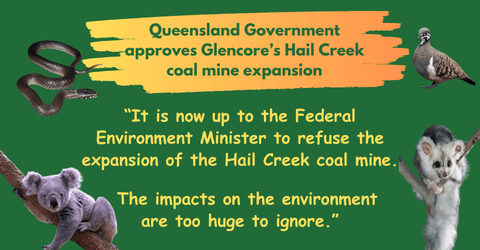
Environmental Advocacy in Central Queensland (EnvA) has condemned the Queensland Government’s decision to approve an extension to Glencore’s Hail Creek open cut coal mine near Nebo in Central Queensland.
The approval allows for the clearing of 685 hectares of land, including:
- nearly 600 has of endangered koala habitat,
- nearly 600 ha of vulnerable squatter pigeon habitat,
- 6 ha of endangered greater glider habitat,
- 83 hectares of vulnerable ornamental snake habitat,
- 100 ha of threatened vegetation communities,
- 600 ha of connectivity habitat, and
- 49 hectares of vegetation associated with a watercourse.
EnvA Director Dr Coral Rowston said the decision would have significant impacts on threatened species and biodiversity connectivity.
“This project will have devastating impacts on threatened wildlife,” Dr Rowston said.
“It will clear hundreds of hectares of habitat for koalas and other protected species and disturb vegetation within a Statewide biodiversity corridor linking Homevale National Park to surrounding habitat areas.”
Dr Rowston said the approval sits uneasily with the Government’s public commitments to protect koalas.
“Just a few months ago, Queensland’s Environment Minister said koalas are part of who we are as Queenslanders and that the Government is determined to protect them for generations to come.
“That commitment should apply to koalas across the entire state — not just in South-east Queensland.”
Hail Creek has been identified in national emissions data as one of Australia’s highest methane-emitting open cut coal mines. The extension would enable the extraction of an additional 29 million tonnes of thermal and metallurgical coal, extending the life of the mine until 2038 and generating at least 70 million tonnes of climate pollution.
“The greenhouse gas emissions from this mine will not stay in Central Queensland — they will contribute to global warming that is already intensifying extreme weather, harming our wildlife, threatening the Reef, and increasing costs for communities.
“The only condition imposed is that Glencore must implement a greenhouse gas abatement plan, but all we know at the moment, is that Glencore proposes to pay for their pollution if mitigation measures are not effective,” Dr Rowston said.
“Queensland communities are already dealing with severe floods, cyclones and rising insurance premiums. Expanding coal production only deepens those long-term risks.”
The project still requires approval from the Commonwealth Government under the Environment Protection and Biodiversity Conservation Act 1999.
Dr Rowston said the Federal Environment Minister, Murray Watt, now faces a critical decision.
“Queensland’s assessment process did not require a full Environmental Impact Statement, despite the scale of habitat clearing and emissions involved.
“The final decision now rests with the Federal Government.
“We urge Minister Watt to take his responsibility seriously and reject this environmentally damaging coal expansion.”
 EnvA - CQ