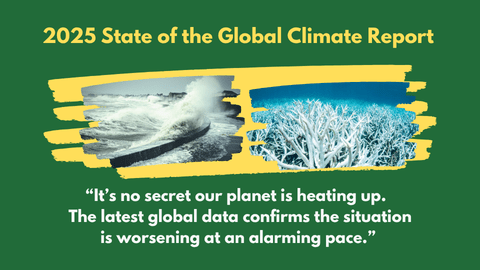
It’s no secret that our planet is heating up—but the latest global data confirms the situation is worsening at an alarming pace.
The World Meteorological Organization has released its 2025 State of the Global Climate Report, revealing that the world has just experienced its 11 hottest years on record. 2025 ranks among the warmest years ever recorded.
The report makes one thing clear: the continued reliance on fossil fuels is pushing the world further away from the goals of the Paris Agreement – and deeper into climate danger.
A climate system under pressure
The latest data paints a stark picture:
Record emissions
Global greenhouse gas emissions reached new highs in 2025. Atmospheric carbon dioxide levels are now around 50% higher than pre-industrial levels, locking in warming for decades to come.
Rising temperatures
Global average temperatures are now approximately 1.43°C above pre-industrial levels—dangerously close to the 1.5°C threshold widely recognised as a critical limit.
If we reach a 2°C increase, it is predicted that there will be devastating impacts on plant and animal species, severe impacts on ecosystems and horticulture, and will see the our reef decline by up to 99%.
Heating oceans and melting ice
Ocean heat content has reached record levels, driving sea level rise and accelerating acidification. At the same time, sea ice in both the Arctic and Antarctic remains well below average, while glaciers continue to retreat at alarming rates.
More extreme weather
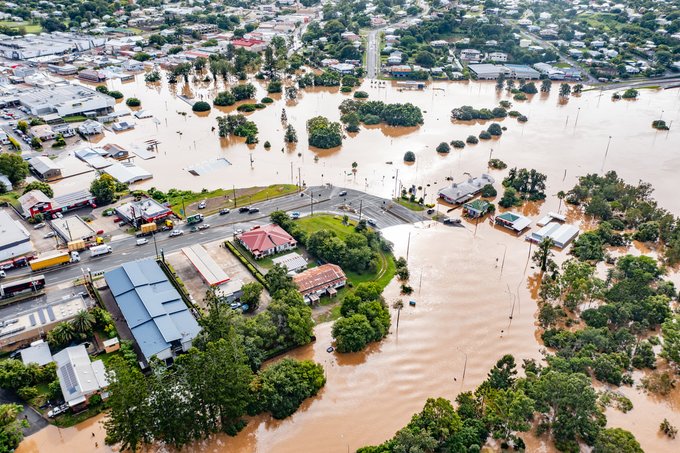
Many of the most destructive weather events of 2025 were intensified by human-driven climate change. Queensland experienced severe cyclones, storms and flooding, while other parts of Australia and the world were hit by devastating fires, floods and extreme cold events. These events are becoming more frequent and more intense.
Australia’s outsized impact
Despite its relatively small population, Australia has a disproportionate impact on the global climate.
Australia’s per capita emissions are among the highest in the world—around three times the global average. This means each Australian contributes significantly more to global warming than individuals in many other developed nations.
These emissions intensify the greenhouse effect, trapping heat in the atmosphere and accelerating warming. Scientists warn that the rate of warming today is roughly double that of previous decades.
The path forward
The findings of the 2025 report echo previous warnings: urgent action is needed now.
The priority must be to rapidly reduce emissions. While some countries are accelerating their transition to renewable energy, Australia is lagging behind and must move faster.
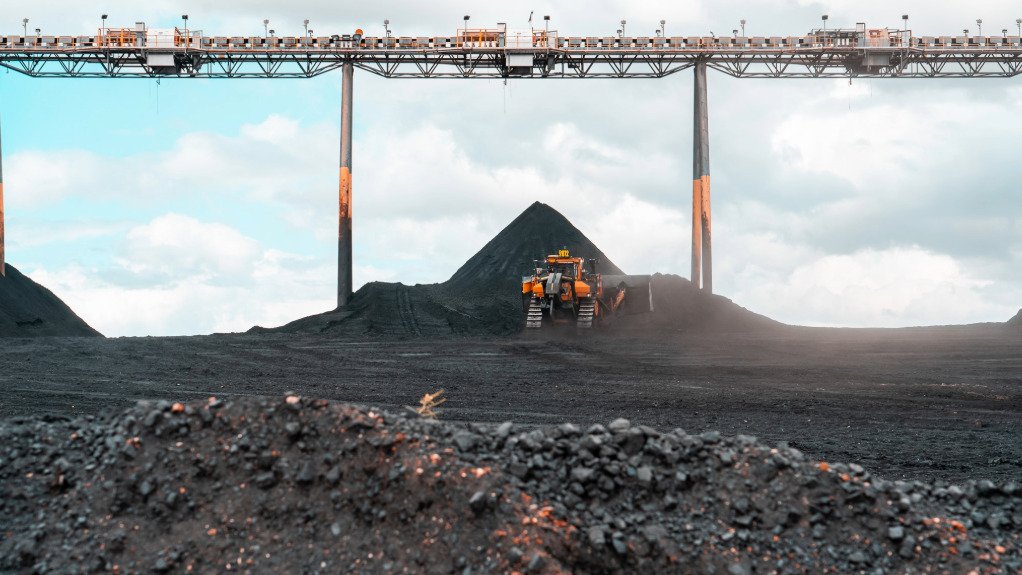
Critically, governments must stop approving new and expanded fossil fuel projects. Achieving net zero emissions by 2050 is essential—but the speed at which we get there will determine how severe climate impacts become.
Even then, climate change will not simply disappear. But decisive action today—phasing out fossil fuels and cutting emissions—can still prevent the worst outcomes.
The question is no longer whether we act, but how quickly. It is the least we can do to protect our communities, environment and a life for future generations.
 EnvA - CQ