Environmental advocates warn outdated rules and poor transparency are putting waterways and the Great Barrier Reef at risk
Environmental Advocacy in Central Queensland (EnvA) is raising serious concerns about the management of coal mine water releases across the Northern Bowen Basin, following a surge in discharges during recent extreme rainfall events.
More than 110 coal mine water releases were recorded this wet season, including one day where 19 mines discharged from 26 sites at a combined rate exceeding 123,000 litres per second – that is a lot of water!
EnvA says the scale of these releases—into already flooded catchments—highlights growing risks that are not being adequately managed under current laws.
EnvA Director Dr Coral Rowston said the approval system, while more developed than in the past, is failing to keep pace with increasing climate extremes.
“Queensland’s framework for coal mine water releases has evolved over decades, but it is still struggling to deal with cumulative impacts, transparency, and compliance,” Dr Rowston said.
“Back in 2008, extreme flooding near Emerald overwhelmed infrastructure designed for far less severe events. Since then, we’ve seen major floods again in 2011, 2022 and now 2025.
“We cannot keep planning for yesterday’s climate.”
EnvA is particularly concerned about the increasing use of Temporary Emissions Licences (TELs), which allow mines to release water outside standard approval conditions during extreme weather.
At least 20 TELs have been issued to coal companies between December 2025 and March 2026.
“The reality is that when mines can’t meet their conditions, they can apply to release more contaminated water,” Dr Rowston said.
“In the Fitzroy Basin, these licences have been routinely granted, allowing additional polluted water to flow into the largest catchment feeding the Great Barrier Reef.”
EnvA argues that current legislation enables these outcomes, rather than preventing them.
The organisation is also calling out major gaps in transparency, saying it is nearly impossible for the public to understand the full scale of impacts.
While some data is published through the Fitzroy Basin coal mine water release notifications, it is limited to the first day of discharge, with no accessible information on ongoing releases.
More detailed reporting – such as annual Receiving Environment Monitoring Program reports and required 28-day reports – is difficult to access or significantly delayed.
Meanwhile, key datasets, including the WaTER database, are not publicly available.
“This means communities and researchers are forced to piece together incomplete information just to understand what is happening in their waterways,” Dr Rowston said.
“We are spending time collecting basic data instead of analysing impacts and informing the public.”
EnvA says the cumulative effect of repeated releases—particularly during increasingly frequent extreme weather events—poses a serious risk to river systems and downstream ecosystems, including the Great Barrier Reef.
“Cumulative impacts from coal mine water releases are a major concern for all water users,” Dr Rowston said.
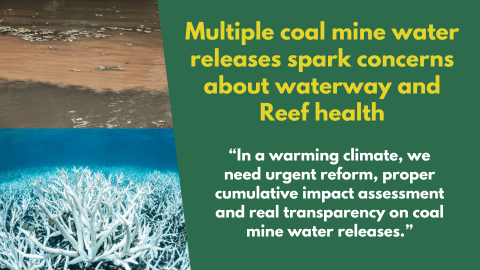
“We urgently need reforms that reflect a warming climate, properly assess cumulative impacts, and deliver real transparency.”
 EnvA - CQ