The level of information in the application was atrociously deficient !
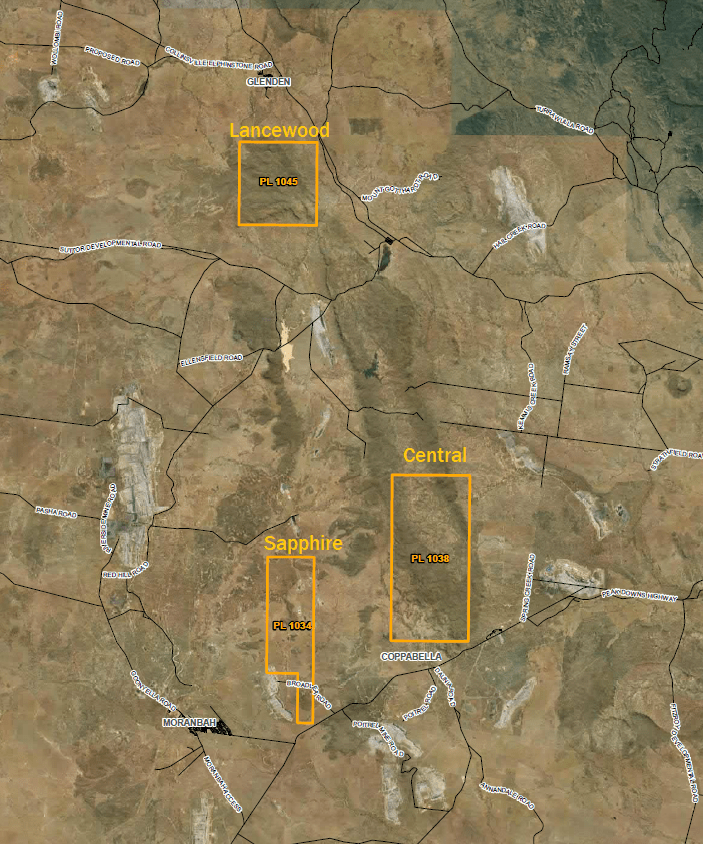
The Queensland government issued an Environmental Authority without requiring a a thorough assessment of the environmental impacts across the three lease areas covered by the approval. Here are just a few of the significant issues in the assessment process:
Threatened species and communities
Blue Energy identified numerous threatened ecological communities, flora species, fauna species and migratory species within or near the Project area.
Their assessment of the potential impacts on biodiversity was based on a desk-top assessment and rapid field assessments with just one targeted survey in the Sapphire Block (the block with the least vegetation cover).
Blue Energy noted that more detailed and targeted surveys will be undertaken which will provide a more thorough understanding of the habitats and species using the Project site.
Despite knowing that matters of national and state environmental would be impacted, the Queensland government provided the approval without any detailed survey work on Central and Lancewood blocks, and without requiring Blue Energy to refer their application for assessment under the EPBC Act.
Information request
The Queensland government requested further information from Blue Energy to clarify their proposal and the likely impacts before providing approval for the project.
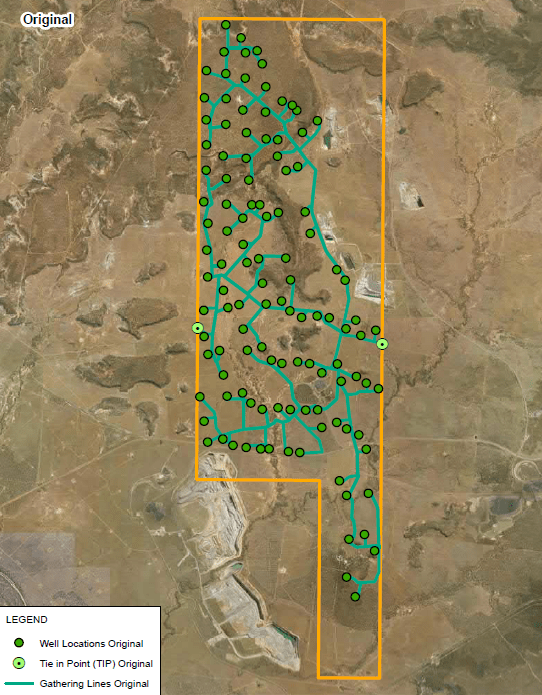
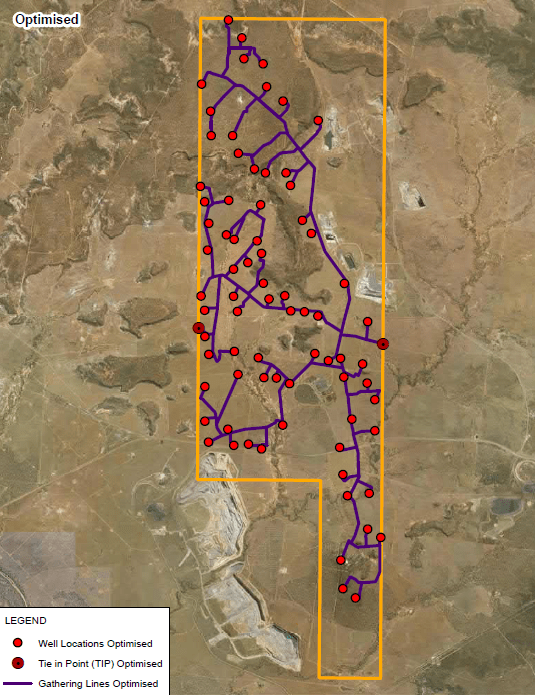
The request was further information on water management, gas and associated infrastructure, soil types, field ecological assessments, and an assessment of habitat connectivity and offset requirements.
Blue Energy’s response to the field ecology assessment was to confirm that additional desktop and ground-truthing was completed with this resulting “in a significant reduction in the project scale and intensity” of the proposed wells (see image above as the Sapphire Block example). The revised application notes that the number of well pads can be reduced from 530 to 370 pads along with a 30% reduction in the footprint area.
However, Blue Energy considered that this demonstrated their ability to reduce the disturbance area, but still asked that their application be assessed at the original disturbance footprint. The Queensland government accepted this and provided an approval for the original number of well pads and disturbance area, despite the occurance of threatened species and communities and no detailed studies of their distribution across the project area.
Habitat fragmentation and offset requirements
Offsets are required in accordance with the Queensland Environmental Offsets Policy Significant Residual Impact Guideline where there are likely to be residual impacts on threatened species caused by habitat fragmentation. This requires propoponents to assess connectivity values in accordance with the landscape fragmentation and connectivity tool outlined in the guideline.
Blue Energy identified important connectivity vegetation for flora and fauna in all three petroleum lease and have committed to field investigations to identify vales and carrying out the impact assessment before site disturbance.
Despite the occurrence or potential occurrence of matters of state and national environmental significance, the Queensland government has approved the clearing and fragmentation of habitat on the promise that Blue Energy will do its best to not significantly impact on threatened species and communities and will seek additional or approvals if required. The environmental compliance has been left in the hands of the proponent.
Potential environmental impacts of the Blue Energy coal seam gas project
The following are just a few of the likely impacts of this project.
Ground water
To produce gas from coal seams, water must be extracted first, lowering the pressure so the gas can flow out of the coal. The volume of groundwater extracted can vary significantly between individual wells, coal seams and coal basins, depending on geological conditions.
Groundwater extraction may affect the quality and reduce the quantity of groundwater in adjacent aquifers that may be used for landholder water supply or by groundwater dependent ecosystems.
The Blue Energy application identifies 404 registered waterbores in or close to their proposed gas wells of which 56 are used for water supply. The impacts on the water supply from these bores for landholders had not been confirmed before the Queensland government provided approval for this project to proceed.
We also know that the groundwater impacts are also likely to impact on the nationally important Lake Elphinstone wetland – but there is no assessment of the likely impacts on this important wetland and the recreational opportunities associated with the Lake.
Biodiversity
Blue Energy identifies four threatened ecological communities, 13 threatened plants, 22 threatened animals and 14 migratory species within or near to the Project area. All these species and communities will be directly impacted by the Project through the direct loss and fragmentation of habitat. Other operational activities, such as the gas piplines to transport the gas to market also have the potential to adversely impact on an even broader range of threatened species and communities.
The assessment of the potential impacts on biodiversity has been based on a desk-top assessment and rapid field assessments with just one targeted survey in the Sapphire PL1034. More detailed and targeted surveys are yet to be undertaken which will provide a more thorough understanding of the habitats and species using the Project site, but this did not stop the Queensland government providing an approval.
Greenhouse gas emissions
The Project will negatively contribute to climate change and global warming through greenhouse gas (GHG) emissions resulting from the proposed activities. The accretion of GHGs in the atmosphere as a result of human activities has already caused changes in the climate system with tangible impacts, including extreme weather patterns and climate related disasters.
Blue Energy recognises that ‘emissions of [greenhouse gases] are of a concern due to their potential to contribute to the greenhouse effect and thus climate change’. However, Blue Energy only addresses emissions from the Project in terms of the potential impact on local air quality.
Blue Energy did not provide any assessment of GHG emissions in relation to their contribution to climate change. All we know is that the Project is modelled to access 363 petajoules of reserves and 1,278 petajoules of contingent resources. The Project and the resultant burning of the gas produced will amount to a significant contribution to GHG emissions.
 EnvA - CQ